
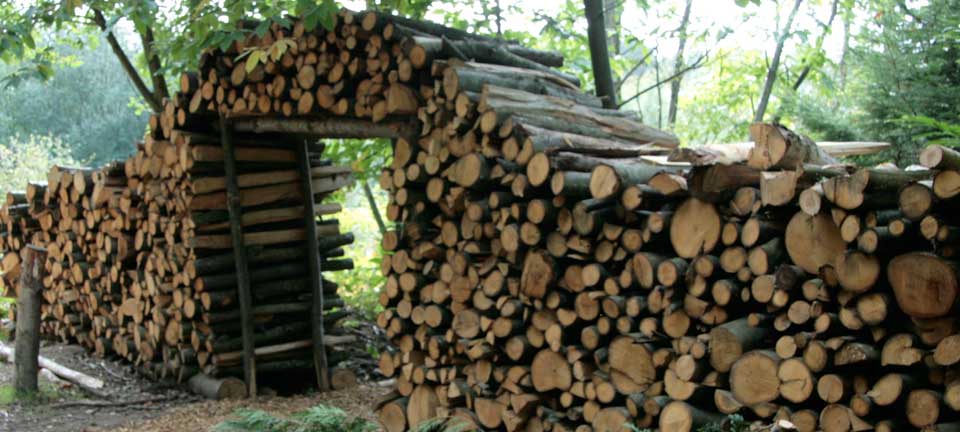
Sustainability inspirations in a woodland setting: Event 3rd February

wwbarn

If you’re looking for some inspiration to lift the winter gloom, head to Wilderness Wood in East Sussex. The sister company to Beyond Green, Wilderness Wood runs a whole range of events and activities bringing people from all walks of life together to enjoy a taste of sustainable living in a beautiful woodland setting. On the evening of Friday 3rd February the wood is hosting the first of 2012’s monthly candlelit dinners with inspiring speakers who are expert in a particular aspect of sustainable living. Kicking off this year’s events, Trewin Restorick, the founder of Global Action Plan (one of the UK’s leading environmental charities) will share his experiences of working at the cutting edge of greening Britain, reflect on progress towards sustainability and share his ideas for how we can each really make a difference in 2012.

The 3-course locally-sourced menu will include celeriac cream soup with squash brochette and truffles, rosti with field mushrooms, smoked peppers & braised baby leeks, panfried seabass with saffron fondant, buttered spinach & dill veloute, and caramelised pears with vanilla bean panna cotta & red wine or poached blueberry syrup. All served with a range of local and organic wines and beers. For more information see http://www.wildernesswood.co.uk/event/candlelit-dinner-trewin-restorick-ceo-global-action-plan and to book places call Wilderness Wood on 01825 830 509.


Feedback from Broadland Workshop

IMG_3020

A month ago in mid-October, the Beyond Green design team hosted a series of workshops and exhibitions for stakeholders and members of the public to discuss the draft plan, concepts and designs for development at Broadland.  Many valuable ideas were brought forth that has since helped us make our draft masterplan stronger and more aligned with community needs. The key issues that were raised at these workshops and our initial reactions to them can be viewed by clicking on the following link (PDF).

Broadland October Feedback

Anyone who wasn’t able to attend the sessions can view the exhibition boards presented at the workshops HERE.

Since beginning exploration of development opportunities in Norfolk, we have made it a priority to be open and engaged with the greater community.  The following clip captures some very promising messages that articulate how our approach thus far has been valued by varying local stakeholders.  A special thank you goes out to Bruce Bentley, Jason Kidman and Will Harvey who shared their thoughts with us.


Disgusted with Tunbridge Wells

RitzCinema

This piece is written by Jonathan Smales, Executive Chairman of Beyond Green.

Good friend and Beyond Green associate Paul Murrain mailed me a copy of an AP release yesterday reporting the alarming increase in greenhouse gases between 2009 and 2010. Apparently the rise of 6% is the fastest increase on record, equivalent to an extra 564 million tons of carbon which itself is a number bigger than the emissions form all but three of the world’s countries – China, the US and India (link to article HERE).  This is a sign of ‘how feeble the world’s efforts have been at slowing man-made global warming’. One commentator, Chris Field from Stanford, asks in the light of this astonishing increase whether we might need to look beyond the International Panel on Climate Change (IPCC) ‘worst case scenarios’ for global climate to ‘something more extreme’.

But rather than look beyond the IPCC let’s look a little closer to home. After a tiring day at work and despite the grim news on carbon (which actually was no big surprise) rather than stay at home and do something sensible (and low carbon) like read or listen to music, my partner and I drove to the cinema in Tunbridge Wells. Normally when we go out we travel 5 miles to the lovely cinema on the high street in Uckfield but we wanted to see Stephen Soderbergh’s ‘Contagion’. The journey turned out to be a horror show cameo of how mixed up and plain stupid things have become with regard to the messy but vital trinity of travel, town planning and carbon.

At first we couldn’t get out of the drive of our house because cars were speeding along the road through the village with its token 30 mph speed limit at what must have been at least 50 mph; presumably they were in enthusiastic pursuit of former Transport Secretary Phillip Hammond’s advice cum admonition, offered in defence of his proposal to increase motorway speed limits to 80 mph, to ‘get into the fast lane of the global economy’.

Arriving eventually in Tunbridge Wells we were sent on a cook’s tour of the town wiggling this way and that for mile upon mile, exploring all manner of suburbs and dead ends. After several wrong turns we found ourselves lost! Stranded, bemused and spooked in a giant, out-of-town, hybrid shopping centre, business park, entertainment complex. With no obvious landmarks (all the glass and steel sheds look exactly the same but for the luminous corporate logos polluting the night sky), normal
street patterns nowhere to be seen, legibility zero, people nil, alienation at max, we jiggled around haplessy until miraculously after half-an-hour of disorientation and lots of iPhone wayfinding we ’arrived’ at the cinema. At first we weren’t sure it was a cinema – it could have been a car showroom, a tile centre or perhaps a Staples. Surrounded by a vast car park with row upon row of cars  (but still strangely no people to be seen) we made our way to the garish entrance to be greeted by massed ranks of snacks, sweets and video games illuminated by a power station load of garish lighting. Still no people.

Now, apparently, Tunbridge Wells used to have a charming cinema in its centre, close to proper cafes and restaurants, shops, bus routes and the like. But at some point in the last 20 years the town spewed important parts of itself into that carbon hungry, car-frenzied, car-dependent, hybrid business park jobbie. With transport representing c.25% of our carbon footprints (and growing) how can there be any place for these no-place, remote, soulless, commercial theme parks. They take the heart out of towns, create congestion, destroy character, reduce social interaction and drive up carbon emissions. What’s the opposite of ’win-win’? If they can be allowed in a beautiful town like Tunbridge Wells (where one of the MPs, Greg Clarke is a Planning/Localism Minister in government incidentally), what chance elsewhere? And what do we do with them once carbon has a proper price and people can no longer afford the frequent private travel. ‘Re-purposing’ (as the Americans say) one of those monsters is beyond belief. Except maybe the sheds could be used for carbon capture? Or maybe we could move into these sealed environments as safe havens when the climate outside in real places has become too fierce?

The film was rubbish incidentally. Don’t go. and especially don’t go there.


Wilderness Wood to host eco-celebrity Alistair McGowan on October 7th

wdytya4_alistair

Beyond Green sister company Wilderness Wood is a 62-acre productive woodland in East Sussex, a quaint village located one hour south of London via train.  The Wood hosts a variety of eco-initiative for nature appreciators large and small, from guided hikes that search out edible fungus, bugs and woodland monsters to handmade furniture and locally sourced, organic food available for purchase.  Accompanying the many activities provided during the day, Wilderness Wood has also presented a series of monthly candlelit dinners to celebrate unique and ambitous efforts taken by individuals of varying disciplines.  The upcoming dinner is particularly special, hosting the accomplished actor, impressionist and eco-advocate Alistar McGowan on October 7th at 7:30PM.

Alistair is probably best known for his impersonations on BBC1’s BAFTA-winning The Big Impression, but his career has ranged from irreverent comedy to serious drama, together with writing and directing. Alongside his career as a performer, Alistair is a passionate spokesman on environmental issues. He’s helped promote campaigns for Sustrans, the Woodland Trust, Trees for Cities and Recycle Now and is an ambassador for WWF-UK. He developed a green charter for the film industry and in partnership with Zac Goldsmith, Emma Thompson and Greenpeace, bought a strip of land to block development of the proposed third runway at Heathrow. He’s never owned a car.

To learn more about Alistair’s unique journey firsthand whilst enjoying a handcrafted organic meal in fantastic company, refer to Wilderness Wood’s website HERE for more information.


A world first

farm shop

A FARM: shop like no other

Farm shops are popping up in the most unlikely of places these days, with produce transported in (hopefully) from nearby farms and containing an enticing display of well sourced seasonal and ethically produced meat, fruit and vegetables. Nothing we’ve seen so far however has been quite as unique as the shop we visited last week in London’s east; it literally was a farm in a shop!

FARM: shop is the genius invention of ‘Something & Son’, a trio of entrepreneurs, two of which are alumni of Beyond Green. Keen to find out more about the enterprise, some of us went to visit the farm last week with Sam Henderson explaining the scientific workings of the place to us…

The shop/farm started as a dream for the trio until they won Hackney Council’s Art in Empty Spaces initiative, which awarded them the chance to transform an empty property in Dalston into something ‘useful and meaningful’. With a budget of just a few thousand, some handy contacts and a lot of elbow grease, a year later and they’re not only well on their way to creating a fully fledged farm with all sorts of inspiring food production initiatives on the go, but they’ve also  doubled the rental value of the property for the council through their work!

Our tour begun in the garden, where we found a polytunnel hosting tadpoles, salad and veg supplies with plans for a food and drink bar amongst the herbs and even space for pigs alongside!  We  then worked our way up to the top of the building, stopping along the way to admire the Tilapia powered aquaponics system (and office space), the hydroponics growing a plentiful supply of premium basil. The kefur bacteria display in the hallway (recently used in their homemade gingerbeer experiment) led up to the tomato (and will be pineapple) factory on the second floor and a meeting room with a view of 4 happy chickens pecking away in a run on the roof.

This is way more than an exhibition space however, since all the food they produce is designed to be eaten on site. The team have recently renovated the kitchen so they can prepare and sell food in the lovely little cafe; from mushroom omelettes to a planned fish fry using the Talapia from the room next door! Demand for produce in the shop is high, and any food they can’t grow onsite is supplemented from the sister (and more traditional) Church Farm in Ardeley.

At a time when you can’t eat a tomato without enquiring about the carbon intensity of its production, the project is also unique since it’s “not out to prove anything.” In response to our questions about the relative benefits and potential footprint of growing pineapples in the sunny room upstairs, Sam replies that for them, its all about inspiring people, and that the team “simply sought to create something fascinating…and have never tried to take sides”.

FARM: shop is definitely fascinating; a world first come to life through the commitment, skill, intelligence and imagination of the team. We’d advise you to visit the café for a brunch with a difference, or take a tour yourselves (you can liaise with Sam to book tours starting at £5 per person)!


How to do eco in style

eden project

In this blog prepared to mark the 10 year anniversary of the inspirational Eden project, green living expert Joanna Yarrow shares her top ten tips for a stylish and ethical lifestyle.

View the article on the telegraph’s website here, and click here to see some more of the guest birthday blogs and other shenanigans from Eden!


Beyond Green Living’s looking for new talent

BG Living Logo

Beyond Green Living: Communications and Research Executive  

Do you have a passion for sustainability and a knack for getting the word out? Can you find out new things fast and use that knowledge to inspire people to try out different ways of living?

We’re looking for someone to help us make change happen by delivering systematic and professional communications services to Beyond Green Living and across the whole Beyond Green Group.

Beyond Green is a pioneering interdisciplinary sustainability company. We work across sectors, delivering strategic consultancy projects, designing and producing our own sustainable developments as well as a range of practical and applied communications projects. All our works focuses on answering the question ‘how shall we live?’

This is a fantastic if demanding opportunity for a rising star of the communications industry who wants to deepen their knowledge and fast-track their interest in and passion for sustainability.

Read more here: BGL communications and research executive


Joanna Yarrow at Wilderness Wood: an opportunity to branch out

JY sunday times

In the latest article linking Joanna, Wilderness Wood and the big forest debate she appeared in the Sunday Times Home section.

Click the link below to read the story.

Joanna Yarrow in Sunday Times Magazine Home Section


Agroecology embraced as a fundamental, cross-party issue

agroecology

Food, and all that goes with it (agriculture, ecology, environmental sustainability, community interaction, economics, politics, employment – the list is endless) are all issues fundamentally connected to Beyond Green’s overarching concern of ‘how shall we live?’  It was with huge interest then that we attended the launch meeting of the All Party Parlimentary Group on Agroecology this week in Westminster.

The inaugural meeting, entitled ‘Farming in the age of ecology’, was attended by around 80 representatives from farming groups, NGO’s, business, MP’s including Caroline Lucas, and guest speakers, Dame Ellen MacArthur and Colin Tudge.

Though the connection between sailing and farming may not be immediately obvious, Ellen MacArthur delivered both an inspirational and relevant opening speech about her dream, to sail around the world singlehandedly, and how she made it a reality. Essentially, she shared with the attendees the story of a journey of a discovery that she made all alone, in the middle of the ocean; that the survival of human beings on this earth was in jeopardy.  She likened this ‘sense of enlightenment’ to turning over a stone and not being able to or wishing to put it back down again.

From that (turning) point onwards, she ceased to sail competitively, and instead focused all her time and energies into educating herself about sustainable development, and founding both the Ellen MacArthur Trust and the Ellen MacCarthur Foundation - the latter of which exists to educate and inspire the next generation to rethink, redesign and rebuild a positive future. Her passion is waste, and the challenge of transforming this linear economy, (within which the concept of waste is exists) into a circular,  cradle to cradle system where waste is a resource to be welcomed, rather than a problem to be stuck with. Her key message set the tone for the group; that the sustainability challenge we face now is perhaps the greatest of our time, but this by nature also makes it one of the greatest opportunities.

Colin Tudge spoke more directly to the topic of discussion, agroecology, stating that being able to produce good food to the highest standards (by what he calls ‘enlightened agriculture’) is a precursor to making everything else happen; peace, equity, justice…. And, he suggested, “it’s not even that hard to do.” The problem is that the government is asking a series of irrelevant questions, and missing the fundamental solution; the creation of a system that imitates nature such that it can achieve both maximum diversity and integration whilst requiring minimum input.

“Can organic farming and small farms feed the world?” Yes, Tudge says, “they’ve had done so for hundreds of thousands of years before now, and they continue to feed the majority of the population today”. If we are to achieve this system of ‘enlightened agriculture’, what the  APPG needs to do is to create the correct policy and economic infrastructure to enable this, such as abolishing laws around patenting and banning the feeding of pig swill, for example. Agriculture needs to be rescued from the neoliberal paradigm that requires it to exist for profit’s sake, rather than with the express desire to provide the world with food of the highest possible standards.  

Caroline Lucas responded to the two speakers, stating her agreement and enthusiasm for the points raised and the approach championed by MacArthur – good, rather than less bad. In other words, rather than talking about the need for us to do less of one thing (eating meat, driving cars, flying in planes, etc), we need to be talking positively about the sustainable- and attractive- solutions to these problems. Apart from anything else, just doing less, and being more efficient, isn’t a good enough goal. Only via an approach that rewards and reinforces positive actions will we inspire the creativity required to rethink and redesign the current system.

Based on Tuesday’s turn out and the lively and intelligent debate which accompanied it, we’re quite excited about the potential of this group to influence parliament toward the creation of a more sustainable food system. However, as the number of APPG’s currently in existence increases, this is not accompanied by an increase in MPs time, nor a promise that their existence alone will be enough. What will be required, as the group is fully aware, are consistent and targeted efforts to redress the balance between commercial and agroecological agriculture. We’re already looking forward to the next monthly meeting.


a valentine gift from Beyond Green Living

valentine

Show your sweetheart how much you care – for them and the planet – with our top tips for helpless ‘environmentics’: 

 1.    Choose locally grown flowers: 55 million roses are sold worldwide on Valentine’s day, but only c.10% of those are grown in the UK. Avoid unnecessary flower miles and minimise pollution by buying locally grown blooms. Wiggly Wigglers sell beautiful British-grown seasonal bouquets from £25 and Scilly Flowers  sell flowers from the Isles of Scilly. If you want fancy flowers from further afield make sure the farmers growing them get a fair deal by choosing Fairtrade bouquets. Waitrose has a good selection. Or for something even simpler pick your own bouquet of spring catkins and pussy willow.

 2.   Indulge in chocolates with a clean conscience: We eat a hefty 600 000 tonnes of chocolate each Valentine’s day. Low wages, poor working conditions and heavy pesticide use can make chocolate tough on more than your waistline. For delicious guilt-free treats try yummy Fairtrade Divine chocolate, organic Green & Blacks, or for something really exotic the Organic Seed and Bean company’s Chilli or Mandarin and Ginger chocolate.

 3.   Enjoy a romantic ramble: After all that chocolate a walk in the fresh air is the perfect way to top up on endorphins and stimulate your appetite(s!). Now the days are getting longer there’s time to explore the miles of trails at Wilderness Wood (a sister company to Beyond Green Living), with plenty of romantic spots to enjoy en route.  

4.   Beguile your lover with natural scents: 95% of the chemicals used in perfume manufacture are derived from petroleum, and only about 20% of the synthetic ingredients have been tested for their toxicity. There are safer alternatives; start by checking perfume labels, and look for alternatives from certified organic perfumes carrying the Ecocert mark.

 5.    Don’t stop there… Whether you say it with a card (25% of seasonal cards are sent over Valentines), with a ring (10% of people get engaged on February 14th) or with a romantic meal (we waste over 5 million tonnes of food every year), there’s always a greener alternative. Recycled cards (or make your own), fairly traded jewellery and restaurants with the Sustainable Restaurant Association certification are great places to start showing how much you care. 

Enjoy your special day!